Monday, March 23, 2026
AI Automations That Actually Make Money for Shopify in 2026
Stop buying “AI automations.” Start buying profit-per-automation.
Most AI automations for Shopify don’t fail because the models are bad. They fail because nobody ties them to a measurable profit lever: conversion rate (CVR), average order value (AOV), return rate, or labor hours. If you can’t name the lever, you’re collecting subscriptions, not building a system.
In 2026, the baseline has shifted. A meaningful chunk of customers are comfortable letting AI shop for them (34% in the U.S. by 2025), which changes how people discover products and how quickly they decide. [Shopify]
The stores that win aren’t the ones with the most automation. They’re the ones with the fewest automations that are directly attached to money. Teams using AI personalization well earn materially more (Shopify cites 40% more), but that’s not magic—it’s instrumentation + iteration. [Shopify]
- Profit-per-automation = (ΔGross Profit + labor saved) − (tool cost + implementation cost)
- Rank automations by speed-to-impact: “same week,” “same month,” “quarterly”
- Kill anything that doesn’t touch CVR, AOV, return rate, or support tickets within 30 days
The counterintuitive part: the best ecommerce automation 2026 stack is smaller than you think, because every extra integration adds the dreaded “backend, admin panel, integrations, security and testing” tax.
The 2026 automation stack map (and where Shopify merchants waste time)
Reddit founders keep asking which automations “actually” save time or make money right now. The honest answer is: the ones that sit closest to the purchase decision, and the ones that reduce post-purchase drag (returns, tickets, WISMO). Everything else is second-order.
Also: agentic commerce is real now. AI agents that execute tasks autonomously are rolling into enterprise apps fast (TechRadar cites up to 40% of enterprise apps including agentic AI by 2026). That means your stack will increasingly be “define rules + approve actions,” not “manually do tasks faster.” [Techradar]
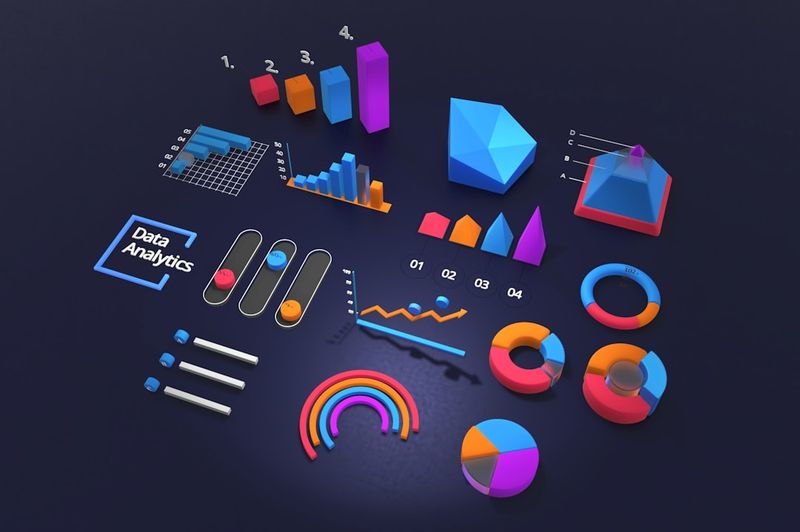
Automation stack map (profit-first)
- Merchandising layer (PDP/COLLECTION): recommendations, bundles, product content, product media
- Conversion layer (checkout): offers, urgency, trust, payment friction reduction
- Lifecycle layer (email/SMS): abandon, post-purchase, winback, replenishment
- Support layer: self-serve answers, order status, returns/exchanges routing
- Ops layer: inventory, forecasting, fraud, fulfillment exceptions
- Data layer: event tracking, attribution, unified customer + catalog data
Unified commerce matters because AI can’t optimize what it can’t see. When inventory, orders, pricing, and customer data are fragmented, you end up with “smart” automations making dumb decisions. [Techradar]
If you’re a SaaS founder selling into Shopify, this is also where deals die: merchants underestimate scope, then you surprise them with the real build cost. Fix that by packaging the minimum viable integration and being explicit about what you won’t touch.
The profit-per-automation scorecard (use this before you implement anything)
Here’s the scorecard we use internally when deciding whether to build or integrate an automation. It’s biased toward measurable lift and against “cool demos.” That bias is why it works.
Score each automation 1–5 on four axes
- Revenue proximity: does it touch PDP, cart, checkout, or post-purchase upsell?
- Measurement clarity: can you A/B test it or at least do pre/post with controls?
- Implementation drag: will it trigger “backend, admin panel, integrations, security and testing”?
- Risk surface: privacy, compliance, hallucinations, brand damage, customer trust
Then compute an expected value range. Don’t pretend you know the exact lift. Use ranges and decide based on downside protection.
- Same-week automations should be low drag and reversible
- Same-month automations can touch more systems, but must have a rollback plan
- Quarterly automations are where unified commerce + agentic workflows pay off
This is also how you reset client expectations without losing the deal: you show the scorecard, highlight implementation drag, and offer a smaller Phase 1 that proves profit before expanding scope.
9 AI automations for Shopify that actually make money in 2026
These aren’t “tools lists.” They’re automations tied to a profit lever. Where credible stats exist, I’m using them. Where they don’t, I’m giving ranges and what to measure.
1) AI-powered personalization on-site (recommendations + dynamic merchandising)
If you do one thing, do this. Shopify cites that companies adept at AI personalization earn 40% more than those that aren’t. That’s the ceiling, not the guarantee. [Shopify]
- Profit lever: CVR + AOV
- What to automate: “frequently bought together,” personalized collections, recently viewed, size/fit guidance routing
- What to measure: CVR by traffic source, AOV, revenue per session, attach rate
2) AI product content automation (PDP titles, bullets, FAQs, and comparison tables)
Most stores underinvest in PDP clarity, then blame ads. Shopify has embedded generative AI across the platform (e.g., Shopify Magic) to speed up product copy and creative tasks. Use it to ship more PDP iterations, not to produce “better writing.” [Aiexpert]
- Profit lever: CVR + return rate reduction (fewer surprises)
- Automation output: 3 variants per product (benefit-led, spec-led, objection-led)
- Workflow: generate → human edit for claims/compliance → publish → A/B test top 20 SKUs
3) AI product video generator (short-form PDP + ad variants)
Video is expensive when you treat it like production. It’s profitable when you treat it like iteration. The winning pattern in 2026 is generating many “good enough” variants, then letting performance data pick winners.
- Profit lever: CVR (PDP) + CAC efficiency (ads)
- What to generate: 6–12 second clips, 1 feature per clip, 3 hooks, 2 CTAs
- What to measure: PDP engagement, add-to-cart rate, thumb-stop rate for paid social
4) Conversion automation at checkout (offers, bundles, and post-purchase upsells)
This is where “AI” often gets overhyped. You don’t need a model to tell you that an extended warranty or consumable refill can lift AOV. You do need automation to test offers by segment without manual setup.
- Profit lever: AOV + gross margin
- Start simple: 1 post-purchase offer for your top SKU, 1 bundle on PDP
- Guardrails: margin floor, inventory availability, fraud checks
5) Lifecycle automation (abandon + post-purchase + winback) with AI segmentation
Email/SMS is mature, but segmentation is still where money hides. AI helps you stop blasting and start targeting: first-time vs repeat, high-return-risk cohorts, and category affinity.
- Profit lever: CVR recovery + repeat purchase rate
- Automate: abandon browse/cart/checkout, replenishment, review request, winback
- Measure: revenue per recipient, unsubscribe rate, incremental lift vs holdout
Inline CTA: If you’re exploring conversion automation on PDP (not just email), RotateProduct turns a normal product photo into an interactive 3D spin. It’s one of the few “content automations” that’s directly measurable on-page. https://rotateproduct.com/
6) Customer service automation that reduces tickets (without breaking trust)
Support automation prints money when it prevents tickets, not when it “answers faster.” The best flows deflect WISMO, automate returns routing, and surface policy answers instantly.
- Profit lever: labor hours saved + fewer chargebacks + higher retention
- Automate: order status, address changes, return eligibility checks, sizing/compatibility FAQs
- Trust rule: always show sources (order data, policy text), never invent
7) Returns automation (predictive flags + better pre-purchase clarity)
A lot of AI ROI is hidden in returns. If you can reduce “it wasn’t what I expected,” you keep revenue and reduce operational cost. This is where better product content and media often beat fancy logistics.
- Profit lever: return rate + support load
- Automate: return reason capture → cohort analysis → PDP fixes
- Measure: return rate by SKU, reason distribution, refund vs exchange rate
8) Ops automation: inventory forecasting + exception handling
Ops automation isn’t sexy, but stockouts and overstock kill profit quietly. Agentic workflows can monitor thresholds, predict demand shifts, and raise “approve/deny” actions for replenishment.
- Profit lever: fewer stockouts + less cash tied in inventory
- Automate: reorder suggestions, low-stock alerts by velocity, supplier lead-time buffers
- Measure: stockout rate, days of inventory, lost sales estimates
9) In-product AI assistants (merchant-side) that actually save hours
Shopify’s in-product assistant approach (e.g., Sidekick) is the right direction: reduce time spent hunting through settings, reports, and workflows. The ROI is labor reclaimed and faster iteration cycles. [Aiexpert]
We’ve seen merchants report meaningful time savings from AI workflow automation; one report cites conversion rates increasing by an average of 22% when merchants implement AI workflow automation. Treat that as a prompt to test, not a promise. [Sniro]
A lightweight implementation checklist (avoids scope creep)
This is the part most guides skip. They say “integrate AI across operations,” then you wake up three weeks later building an admin panel and rewriting your data model.
Implementation checklist (90 minutes before you touch tools)
- Pick one profit lever: CVR, AOV, return rate, or labor hours.
- Pick one surface area: PDP, checkout, lifecycle, support, or inventory.
- Define the metric and baseline (last 14–28 days).
- Define the minimum event tracking required (view_item, add_to_cart, begin_checkout, purchase, return_started).
- Decide test method: A/B, holdout, or pre/post with traffic controls.
- Write rollback conditions (e.g., CVR down 5% for 48 hours).
- Set privacy boundaries: what customer data is allowed, retained, and logged.
- Ship the smallest version in 7 days.
This is also how you reset expectations with a client or internal stakeholder. Phase 1 is not “the full AI transformation.” Phase 1 is a measurable lift on a single lever.
Monetization lessons from “we had users but no revenue” (don’t repeat this)
A painful pattern shows up constantly: a product gets usage, even tens of thousands of users, but revenue stays near zero because conversion mechanics weren’t built early enough (pricing, paywalls, checkout, upgrade paths).
For Shopify merchants, the equivalent is: you get traffic and engagement, but you never build the purchase flow that captures intent—clear PDPs, right offer, frictionless checkout, and post-purchase systems that keep customers.
What to do instead (Shopify edition)
- Instrument first: you can’t monetize what you can’t measure.
- Build “buy” mechanics early: bundles, upsells, subscriptions, and clear value props on PDP.
- Automate the boring: support deflection and returns routing free up time for merchandising tests.
- Treat AI product content automation as a conversion system, not a copywriting shortcut.
The stores that print money in 2026 are the ones that treat conversion automation like infrastructure, not a campaign.
Trust, privacy, and “enshittification” risk (yes, it affects conversion)
Reddit is right to be skeptical about modern tech: age verification creep, facial recognition bias, sensitive data access, and ads creeping into products that used to be clean. That skepticism shows up as lower conversion when customers feel watched or manipulated.
AI automations for Shopify should be privacy-minimal by default. You usually don’t need biometrics or invasive identity checks to personalize a storefront. You need behavioral signals and clear consent.
Practical guardrails that won’t tank your CVR
- Minimize data: store only what you need to run the automation.
- Prefer first-party events over third-party profiles.
- Make AI visible where it matters: “Why am I seeing this?” for recommendations.
- Don’t let AI invent policy: support bots must cite order data and your policy text.
If you get privacy right, you don’t just avoid risk. You also avoid the slow conversion death that comes from customers not trusting your store.
What I’d implement first (if I had 10 hours and wanted ROI fast)
This is the “automation made you feel like the future is already here” version—without the hype. It’s a short sprint that hits revenue proximity first.
- Day 1: Baseline CVR/AOV/return rate + top 20 SKUs by sessions.
- Day 2–3: AI product content automation for those SKUs (3 variants each) + publish to 5 SKUs first.
- Day 4: Add simple on-site personalization blocks (recently viewed + FBT) on PDP/cart.
- Day 5: Launch abandon checkout + post-purchase upsell (one offer) with holdout.
- Day 6–7: Support deflection for WISMO + returns eligibility checks.
- Week 2: Double down on winners; roll back losers; expand to next 20 SKUs.
If you can’t get a measurable lift from this in 30 days, your bottleneck probably isn’t “more AI.” It’s traffic quality, offer, or fulfillment.
Frequently Asked Questions
What AI automations for Shopify make the most money in 2026?
Revenue-adjacent automations: AI personalization and merchandising (Shopify cites 40% more for teams adept at personalization), conversion/checkout offers, and lifecycle segmentation. [Shopify]
How do I avoid scope creep when adding ecommerce automation in 2026?
Pick one profit lever (CVR/AOV/returns/labor), one surface area (PDP/checkout/lifecycle/support/ops), define baseline + rollback, and ship a 7-day minimum version. Unified commerce matters, but don’t start by rebuilding your entire data stack. [Techradar]
Do AI agents matter for Shopify merchants yet?
Yes, mainly for ops and internal workflows. Agentic AI is becoming standard across enterprise apps (up to 40% by 2026), which pushes merchants toward “approve/deny” workflows for replenishment, support routing, and exception handling. [Techradar]
How much lift can AI workflow automation realistically drive?
Treat published numbers as directional. One report cites average conversion rate increases of 22% from AI workflow automation. Your result depends on baseline quality, traffic mix, and how close the automation is to checkout. Measure with A/B or holdout whenever possible. [Sniro]
Are Shopify’s built-in AI tools enough, or do I need extra tools?
Start with what’s native if it gets you to iteration faster (Shopify Magic/Sidekick are designed for that). Add external tools only when you can name the profit lever and the measurement plan. [Aiexpert]